DOE-NSF Rubin Observatory opens a deep window on a famous cosmic field
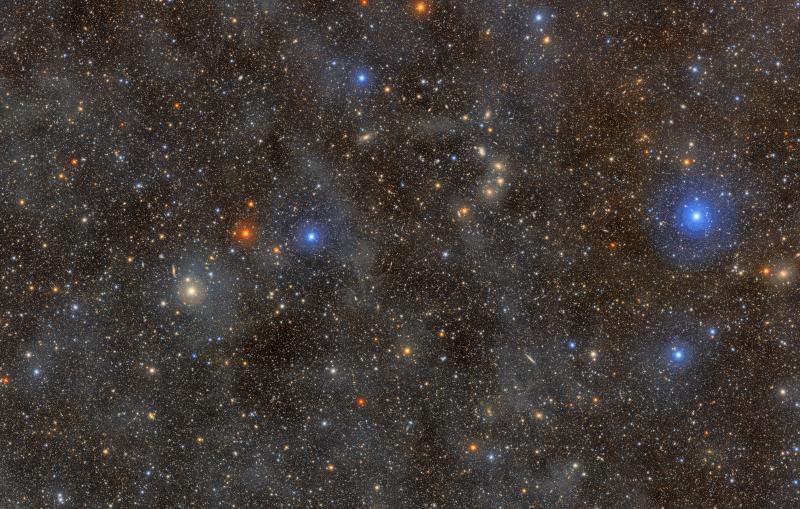
A new NSF–DOE Vera C. Rubin Observatory image featuring hundreds of thousands of distant galaxies in and around the COSMOS field marks the observatory’s first LSST Camera image and catalog release for science.
Read this release on the Vera C. Rubin Observatory website
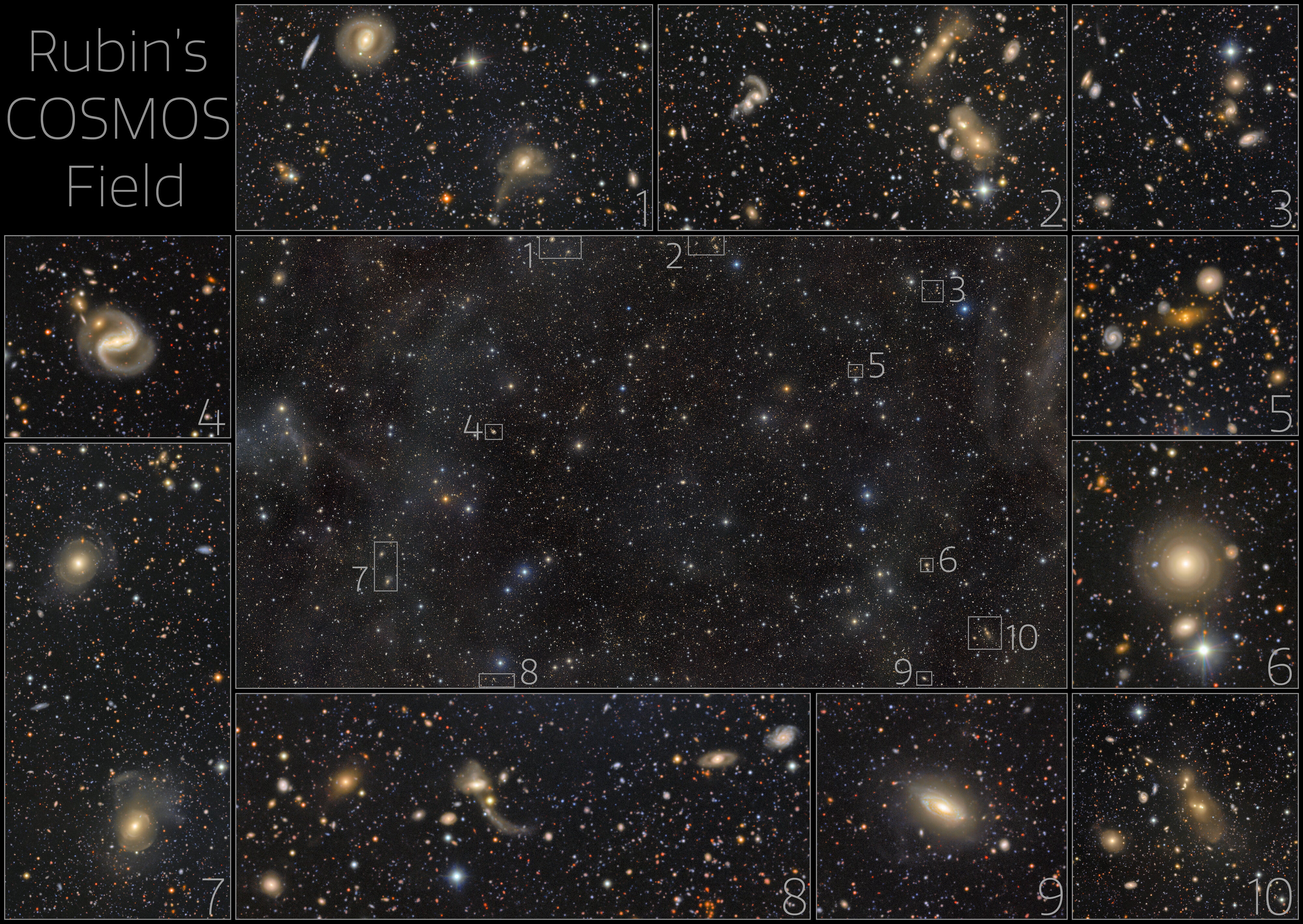
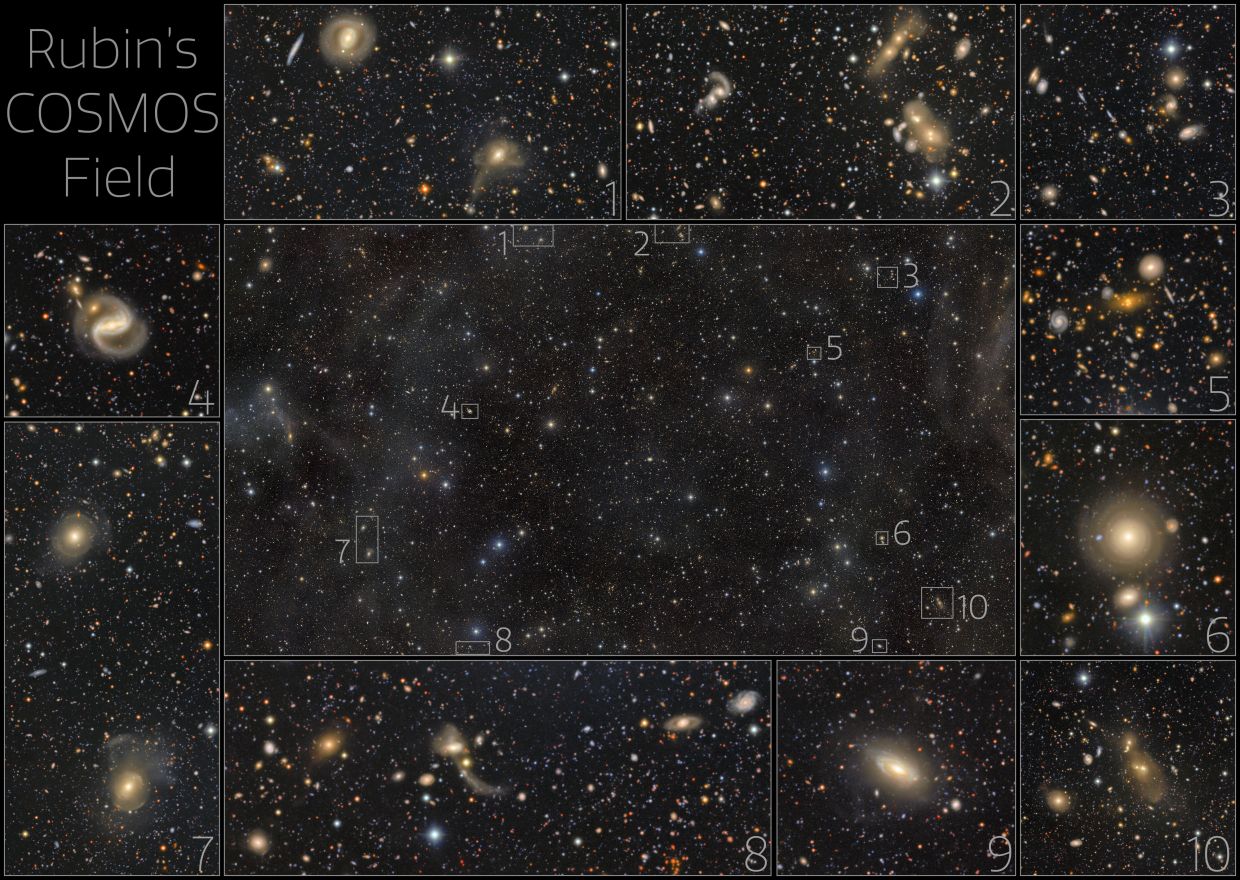
Packed into this single image from Rubin Observatory are many different kinds of galaxies: spirals with delicate arms, smooth elliptical galaxies, distorted merging galaxies, and faint red galaxies from the distant universe. Only a relatively small number of bright stars from our own Milky Way appear in the foreground, leaving an unusually clear view of galaxies stretching far into the distance.
Rubin Observatory is jointly funded by the U.S. National Science Foundation (NSF) and the U.S. Department of Energy's Office of Science (DOE/SC).
This image was captured with Rubin’s 3.2-gigapixel LSST Camera — the largest digital camera in the world, mounted on the 8.4-meter Simonyi Survey Telescope. It features the well-known and well-studied region of sky known as the COSMOS field. It was created by stacking hundreds of individual observations and contains more than half a million galaxies and more than 50,000 stars.
The COSMOS field is especially valuable to astronomers because it looks away from the crowded plane of our Milky Way. With fewer nearby stars and clouds of dust blocking the view, telescopes can see enormous numbers of distant galaxies, many so far away that their light has traveled for billions of years before reaching Earth. Looking deeper into space also means looking farther back in time, allowing scientists to study galaxies at many different stages in the history of the universe.
Astronomers have studied COSMOS for more than two decades. Beginning with observations by the Hubble Space Telescope in 2003, researchers around the world have pointed many of the world’s leading telescopes at this same area, observing it in wavelengths ranging from radio waves to X-rays. Because the field has been observed so extensively, it serves as an important reference point for testing new data, comparing measurements, and combining information from many observatories.
Deputy Director of Rubin Observatory, SLAC National LaboratoryThe COSMOS field is a very important one for LSST science. Its wealth of prior observations, and its repeated targeting both during commissioning and as one of the LSST’s deep fields, will make it very valuable as a testing ground for scientists as they get ready to take on the survey data.

Rubin now brings something new to this familiar field: a combination of depth, wide-field coverage, and repeated observations. By imaging COSMOS again and again with the LSST Camera, Rubin will complement earlier observations and add a dynamic view of the field. This perspective will help astronomers study not only what distant galaxies look like, but also how the sky changes over time.
Because of its scientific value, the COSMOS field is among the regions that will be observed more frequently than most areas included in the Legacy Survey of Space and Time (LSST) — Rubin’s ten-year survey aimed at creating the most comprehensive, cinematic record of the universe in history. With added observations, Rubin will create an even deeper view, revealing fainter galaxies and finer details than can be seen in this first image.
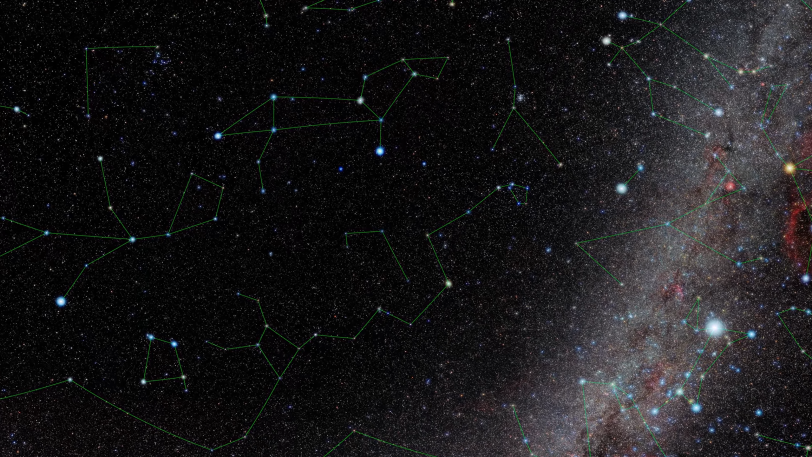
Zoom on Rubin Observatory’s Image of the COSMOS Field
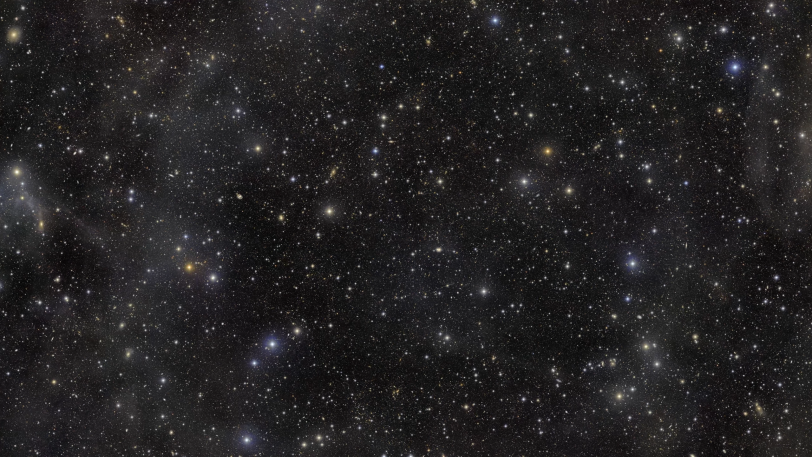
Pan on Rubin Observatory’s Image of the COSMOS Field
This image is being released today to mark the occasion of Rubin’s Early Data Preview 2, or EDP2 — the first phase of Rubin’s Data Preview 2 release. EDP2 is Rubin’s first data preview based on observations from the LSST Camera [1]. It combines Rubin’s science validation observations collected between April 2025 and January 2026. It provides the Rubin science community with a deep co-added (stacked) image covering 3,000 square degrees of night sky, which is around one-sixth of the entire visible Southern Hemisphere sky.
“The COSMOS deep image is just the beginning for Rubin in this region. Repeated visits to the field over the next few years will demonstrate the power of our survey design for discovery by providing our science community with a huge number of transient and variable objects like supernovae and other explosive transients for follow-up and detailed study,” said Bob Blum, director of Rubin Observatory at NSF NOIRLab.
While EDP2 is not a release of data from the full LSST, which has only recently begun, it is a scientifically valuable data release in and of itself. The data preview gives scientists a rich look at the Southern Hemisphere sky, while allowing the Rubin science community to test tools, validate data products, and prepare for the decade-long survey ahead. Notably, EDP2 includes the COSMOS field, as well as the region of sky captured in Rubin’s Ocean of Stars image, which was released to celebrate the beginning of the LSST.
“The COSMOS field is a very important one for LSST science,” said Phil Marshall, deputy director of Rubin Observatory at SLAC. “Its wealth of prior observations, and its repeated targeting both during commissioning and as one of the LSST’s deep fields, will make it very valuable as a testing ground for scientists as they get ready to take on the survey data.”
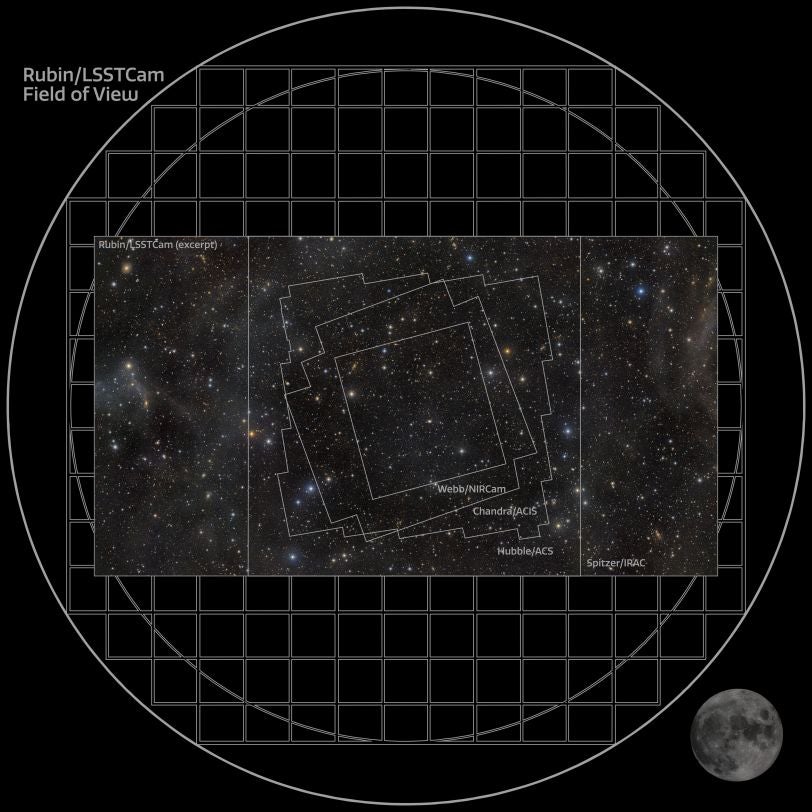
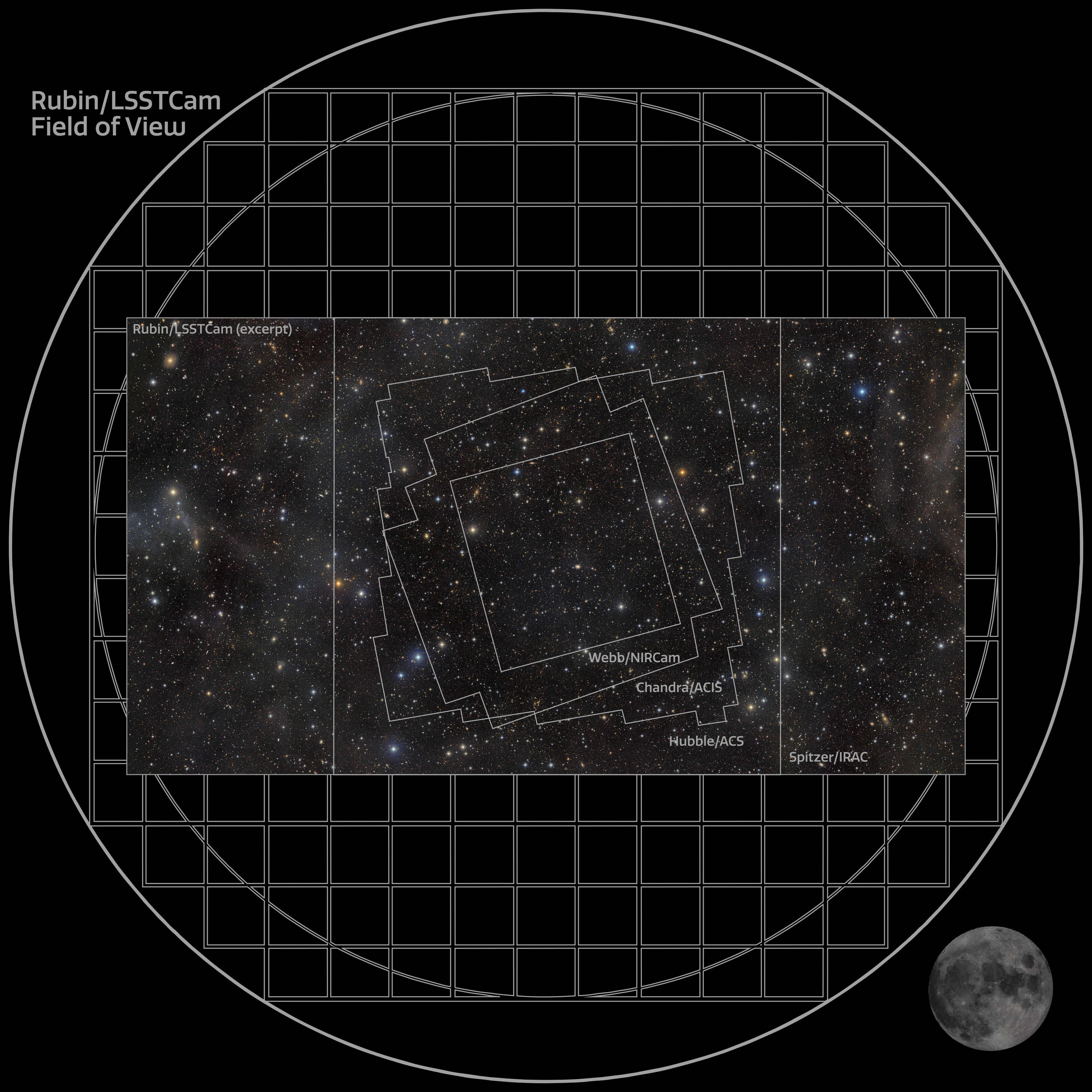
Footprints on COSMOS
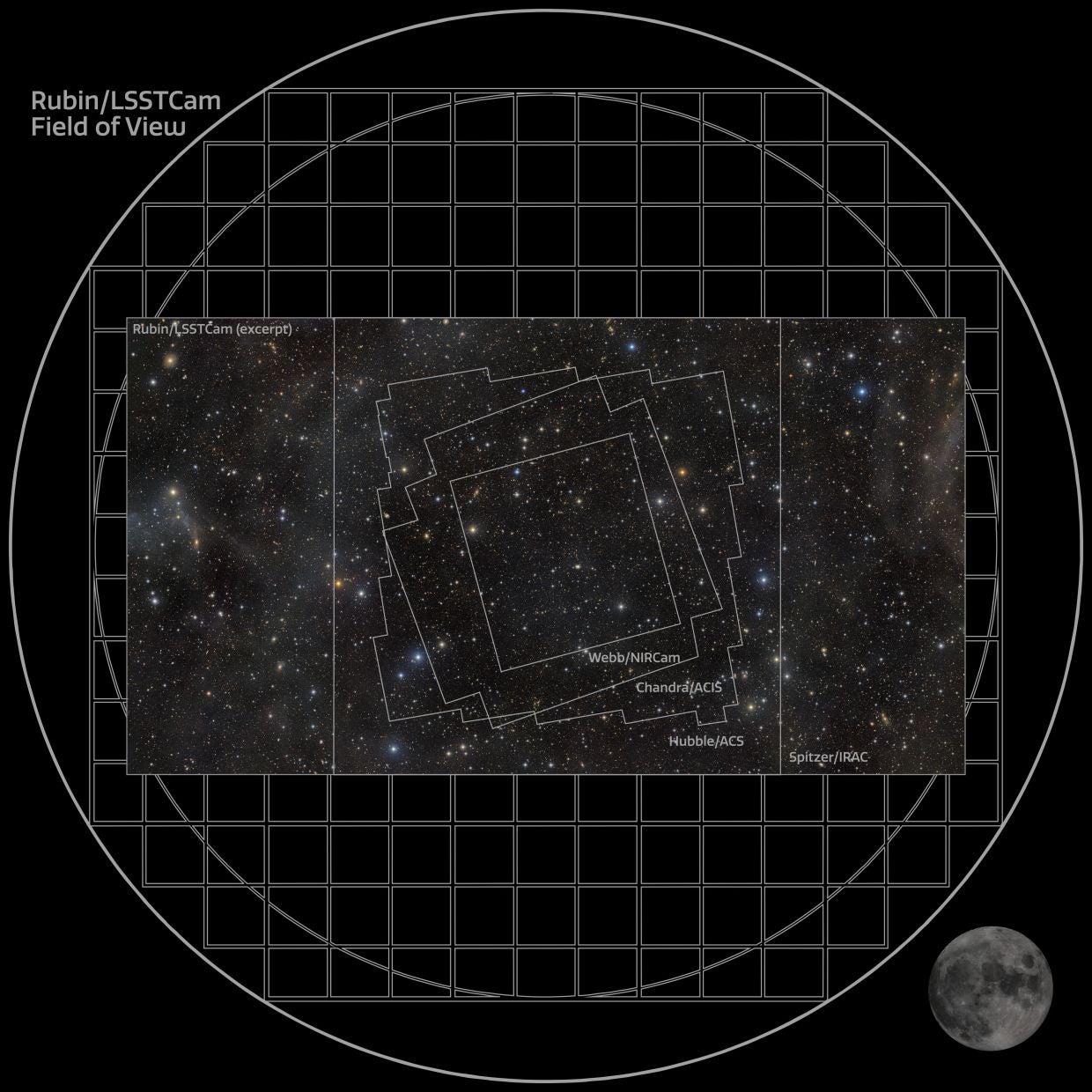
With this new view of COSMOS, Rubin offers an early glimpse of the science to come: an extraordinarily deep and wide view of the universe, revealing both the vast population of distant galaxies and the changing sky above Earth. Visit the Rubin Skyviewer app to explore this field in more detail.
Bob Blum added: “As we celebrate the start of science with Rubin Observatory, our thoughts are with our staff and the community of Chile impacted by the recent devastating storms in the region of Coquimbo and beyond. Our priority is to ensure the well-being of our staff in the region and support the community where we live and work. This image marking the start of LSST science is dedicated to the people of the region of Coquimbo and is a small token of our gratitude for their decades of support for astronomy and the AURA Observatories in Chile.”
The second phase of EDP2, expected in the October–December 2026 timeframe, will add products derived from individual images. This includes the processed visit images from individual observations, difference images that show only detected changes, and the template images, which are compared to the individual visit images to produce the difference images.
Access to EDP2 is available right now only to researchers in the U.S. and Chile, as well as authorized international Rubin data-rights holders. In keeping with Rubin Observatory’s data-access policy, the data products will be made openly available to the public after a two-year proprietary period.
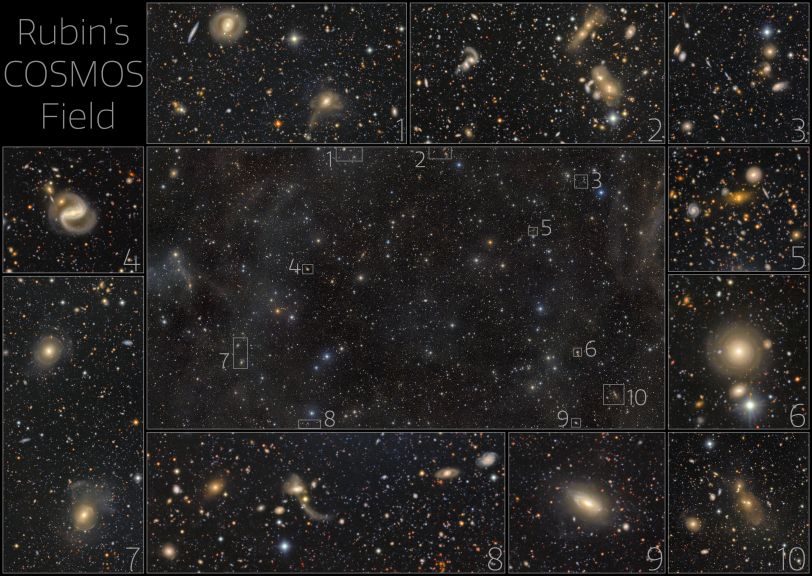
Rubin Looks Deep Into a Famous Cosmic Field (selected excerpts)
Notes
[1] Rubin’s Data Preview 1 (DP1), released in June 2025, contained observations from October–December 2024 taken with the LSST Commissioning Camera — a much smaller version of the LSST Camera that was used to conduct test campaigns.

More information
NSF–DOE Vera C. Rubin Observatory, funded by the U.S. National Science Foundation and the U.S. Department of Energy’s Office of Science, is a groundbreaking new astronomy and astrophysics observatory on Cerro Pachón in Chile. It is named after astronomer Vera Rubin, who provided the first convincing evidence for the existence of dark matter. Using the largest camera ever built, Rubin will repeatedly scan the sky for 10 years to create an ultra-wide, ultra-high-definition, time-lapse record of our universe.
NSF–DOE Vera C. Rubin Observatory is a joint initiative of the U.S. National Science Foundation (NSF) and the U.S. Department of Energy’s Office of Science (DOE/SC). Its primary mission is to carry out the Legacy Survey of Space and Time, providing an unprecedented data set for scientific research supported by both agencies. Rubin is operated jointly by NSF NOIRLab and SLAC National Accelerator Laboratory. NSF NOIRLab is managed by the Association of Universities for Research in Astronomy (AURA) and SLAC is operated by Stanford University for the DOE. France provides key support to the construction and operations of Rubin Observatory through contributions from CNRS/IN2P3. The Science and Technology Facilities Council supports the wide range of UK contributions to Rubin operations provided through the LSST:UK Science Centre programme. Rubin Observatory is privileged to conduct research in Chile and gratefully acknowledges additional contributions from more than 40 international organizations and teams.
The U.S. National Science Foundation (NSF) is an independent federal agency created by Congress in 1950 to promote the progress of science. NSF supports basic research and people to create knowledge that transforms the future.
The DOE’s Office of Science is the single largest supporter of basic research in the physical sciences in the United States and is working to address some of the most pressing challenges of our time.
NSF NOIRLab, the U.S. National Science Foundation center for ground-based optical-infrared astronomy, operates the International Gemini Observatory (a facility of NSF, NRC–Canada, ANID–Chile, MCTIC–Brazil, MINCyT–Argentina, and KASI–Republic of Korea), NSF Kitt Peak National Observatory (KPNO), NSF Cerro Tololo Inter-American Observatory (CTIO), the Community Science and Data Center (CSDC), and NSF–DOE Vera C. Rubin Observatory (in cooperation with DOE’s SLAC National Accelerator Laboratory). It is managed by the Association of Universities for Research in Astronomy (AURA) under a cooperative agreement with NSF and is headquartered in Tucson, Arizona.
The scientific community is honored to have the opportunity to conduct astronomical research on I’oligam Du’ag (Kitt Peak) in Arizona, on Maunakea in Hawai‘i, and on Cerro Tololo and Cerro Pachón in Chile. We recognize and acknowledge the very significant cultural role and reverence of I’oligam Du’ag to the Tohono O’odham Nation, and Maunakea to the Kanaka Maoli (Native Hawaiians) community.
SLAC National Accelerator Laboratory explores how the universe works at the biggest, smallest and fastest scales and invents powerful tools used by researchers around the globe. As world leaders in ultrafast science and bold explorers of the physics of the universe, we forge new ground in understanding our origins and building a healthier and more sustainable future. Our discovery and innovation help develop new materials and chemical processes and open unprecedented views of the cosmos and life’s most delicate machinery. Building on more than 60 years of visionary research, we help shape the future by advancing areas such as quantum technology, scientific computing and the development of next-generation accelerators. SLAC is operated by Stanford University for the U.S. Department of Energy’s Office of Science.
Forty-three international teams outside the U.S. and Chile are contributing to Rubin Observatory and LSST Science through the In-kind Program, in exchange for LSST data rights. These contributions are recognized in the International Data Rights Holder list, which includes all individuals nominated by their respective international programs.
Related stories
Seagull Nebula through the eyes of NSF–DOE Vera C. Rubin Observatory Commissioning Camera
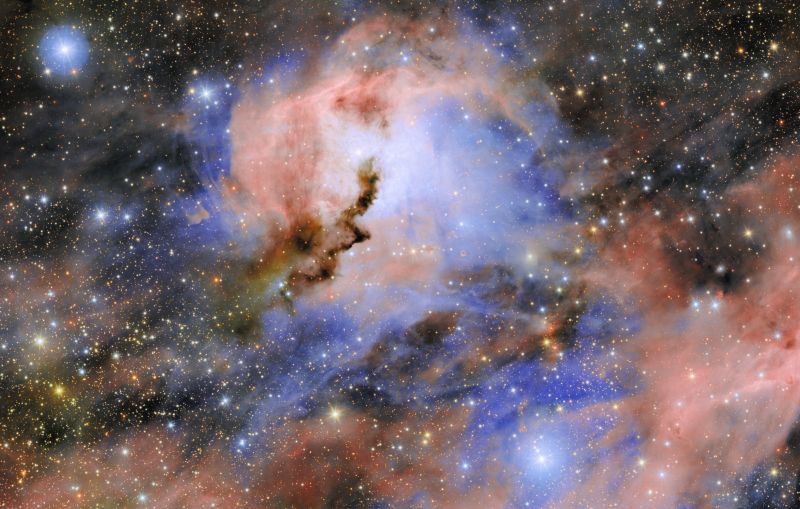


Seagull Nebula through the eyes of NSF–DOE Vera C. Rubin Observatory Commissioning Camera
Containing multitudes: SLAC scientist collaborates to create scalable qubits